
The Sporting Canvas
For the discerning collector, the 19th century represents the pinnacle of animalier art. This was an era where the horse was both a symbol of status and a marvel of nature, and the dog was elevated from a working animal to a faithful companion of the aristocracy.
As a dealer, I find that the works of the Herrings and de Dreux serve as the foundational pillars of this genre, but the “Sporting School” is vast. Below is a curated look at the masters who defined the British and French traditions of the era
The British Tradition: Racing, Hunting, and Prestige
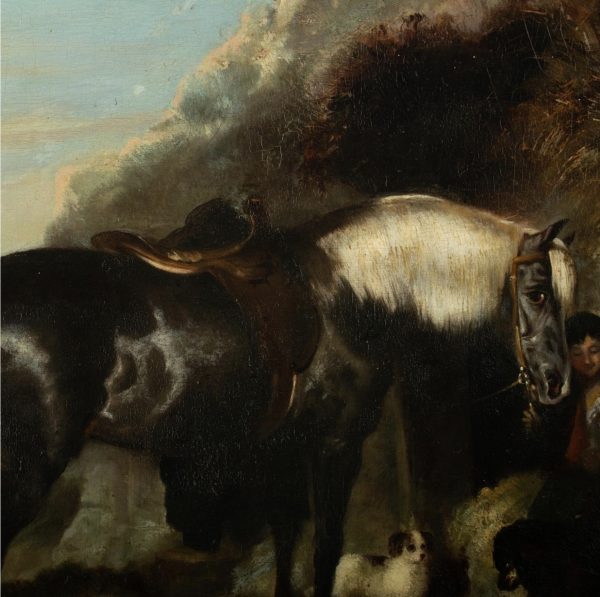
British equestrian art is rooted in tradition—a blend of technical accuracy and the social prestige of the hunt and the turf.
The Herring Dynasty
J.F. Herring Senior (1795–1865): The “Artist Coachman” who became the official painter to Queen Victoria. His work is the gold standard for racehorse portraiture, capturing 33 consecutive winners of the St. Leger.
J.F. Herring Junior (1815–1907): While he shared his father’s technical skill, the Junior Herring is the master of the “Farmyard” narrative. His works often feature horses in busy, communal settings with cattle, pigs, and poultry—offering a more rustic, pastoral charm.
The Masters of the Hunt: Ferneley and Lucas Lucas
John Ferneley (1782–1860): Based in the hunting mecca of Melton Mowbray, Ferneley’s canvases are often grand and panoramic. He excelled at the “hunt scurry”—capturing dozens of identifiable horses and riders across the English countryside.
H.F. Lucas Lucas (1848–1943): A later Victorian specialist, Lucas Lucas moved away from the “event” and toward the “individual.” His portraits of hunters and polo ponies are prized for their intimate, clean precision and anatomical perfection.
The Great British Contemporaries
Sir Edwin Landseer (1802–1873): No discussion of 19th-century animal art is complete without Landseer. He was the preeminent dog artist of the age, imbuing his subjects with human-like emotion. Every serious sporting collection benefits from a Landseer study or one of his iconic “Monarch of the Glen” style stag or hound works.
The Alken Family (Henry Alken): If you are looking for the quintessential “English Sporting Print,” Henry Alken is the name. His work defines the humor and peril of the steeplechase and coaching life.
The French School: Romanticism and the Barbizon Influence
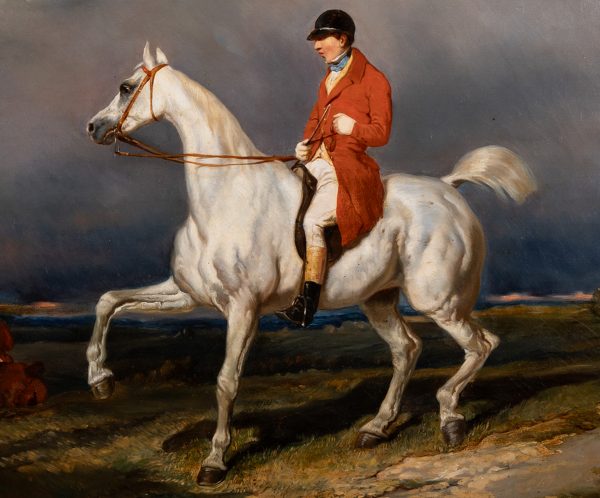
French animalier art often leans more toward the “spirit” and “drama” of the animal, influenced heavily by the Romantic movement and the changing landscape of French politics.
The Romantic Ideal: Alfred de Dreux (1810–1860)
De Dreux brought a sense of high-fashion and “élan” to the horse. His subjects are often rearing, wild-eyed, and aristocratic.
Followers of de Dreux: Due to his immense popularity and untimely death, many 19th-century artists adopted his “Amazone” (ladies on horseback) style. These works offer the same glamorous aesthetic and are highly sought after for interior decoration.
The Transition to Realism: Defaux and Bonnemaison
Alexandre Defaux (1826–1900): A member of the Barbizon school, Defaux’s horses are not race-ready thoroughbreds; they are powerful, earthy creatures integrated into the French forests and farms. His work is characterized by rich textures and atmospheric lighting.
Féréol de Bonnemaison (1766–1826): A refined Neoclassicist of an earlier generation, his work carries the formal elegance of the Napoleonic era, often featuring horses in military or high-state contexts.
The French Powerhouse: Rosa Bonheur (1822–1899)
Arguably the most famous female artist of the 19th century, Bonheur’s The Horse Fair is a masterpiece of equine power. Her work is monumental, focusing on the raw strength of percherons and workhorses, standing in stark contrast to de Dreux’s delicate thoroughbreds.
Where to View and Acquire
While these artists frequently appear in prestigious auction houses like Sotheby’s and Christie’s, public collections offer the best opportunity to study their brushwork:
UK: The National Horseracing Museum (Newmarket), The Tate Britain, and the Leicester Museum & Art Gallery (for Ferneley).
France: The Musée du Louvre, the Musée d’Orsay, and the Château de Chantilly (home to the Great Stables).
A Note for Collectors:
When acquiring works by “Followers of” or “School of” these masters, pay close attention to the treatment of the eye and the fetlock. The great masters never faked the anatomy—it is the hallmark of a true 19th-century equine specialist.