2 950,00 €
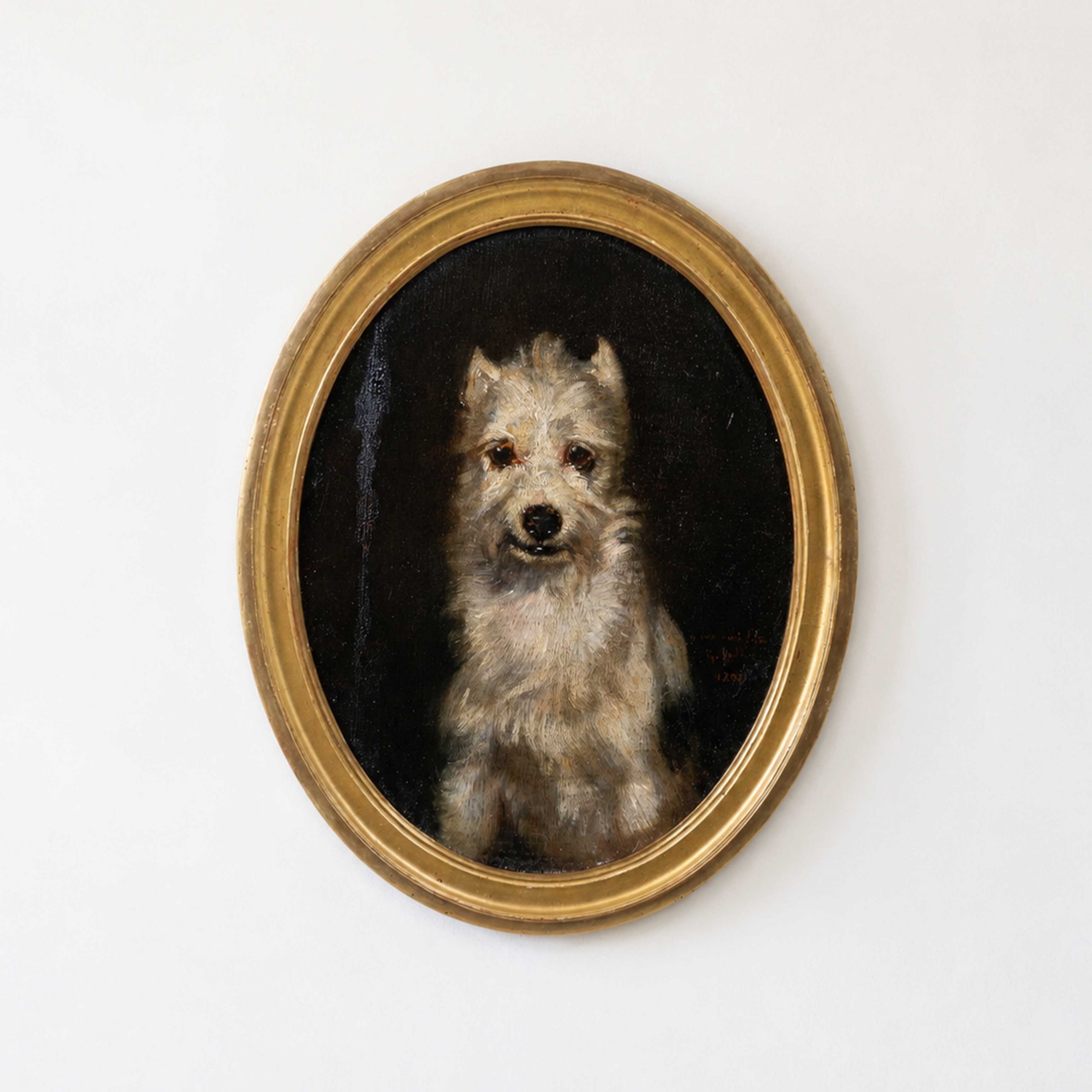
Portrait of a Dog (1856) By Louis Godefroy Jadin (1805–1882)
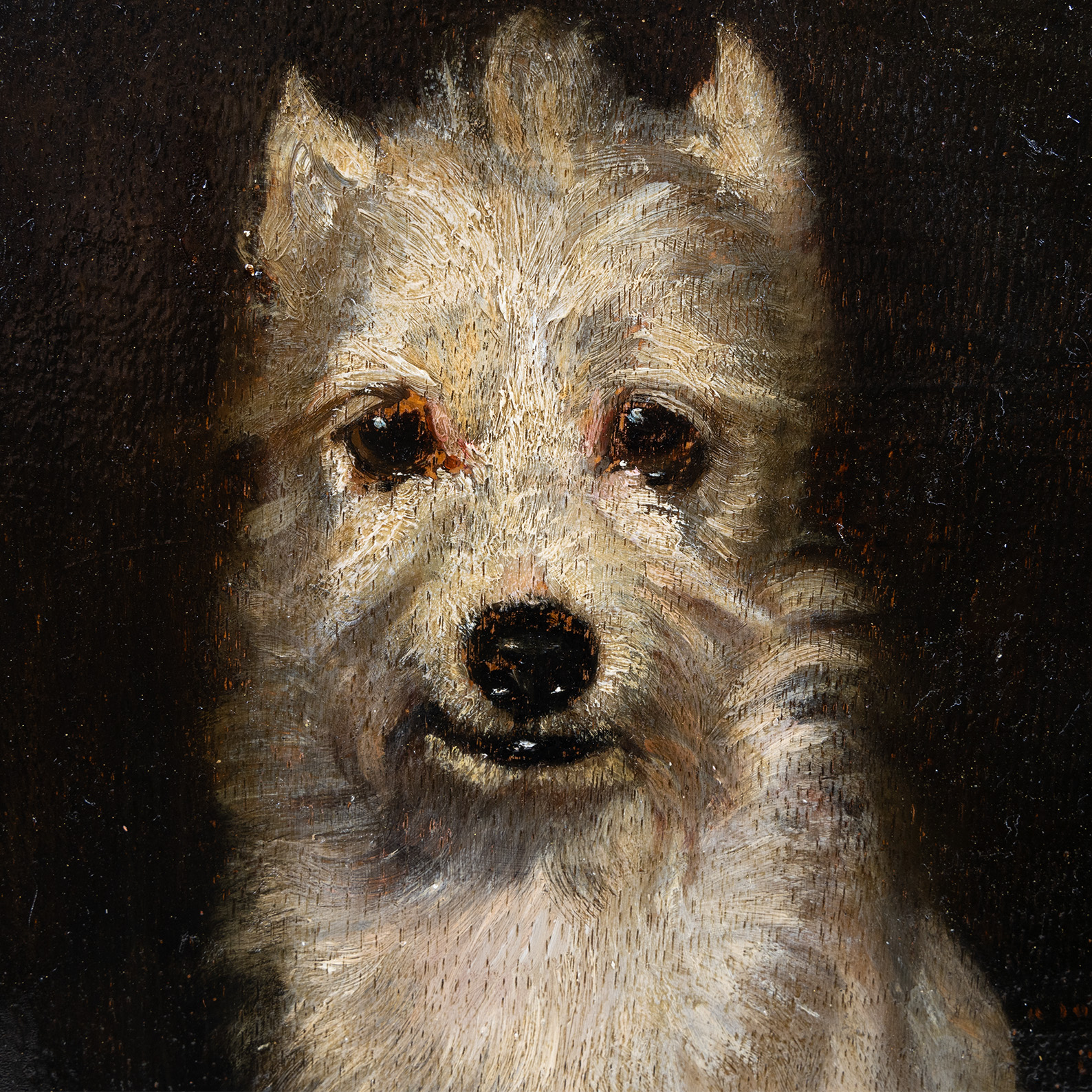
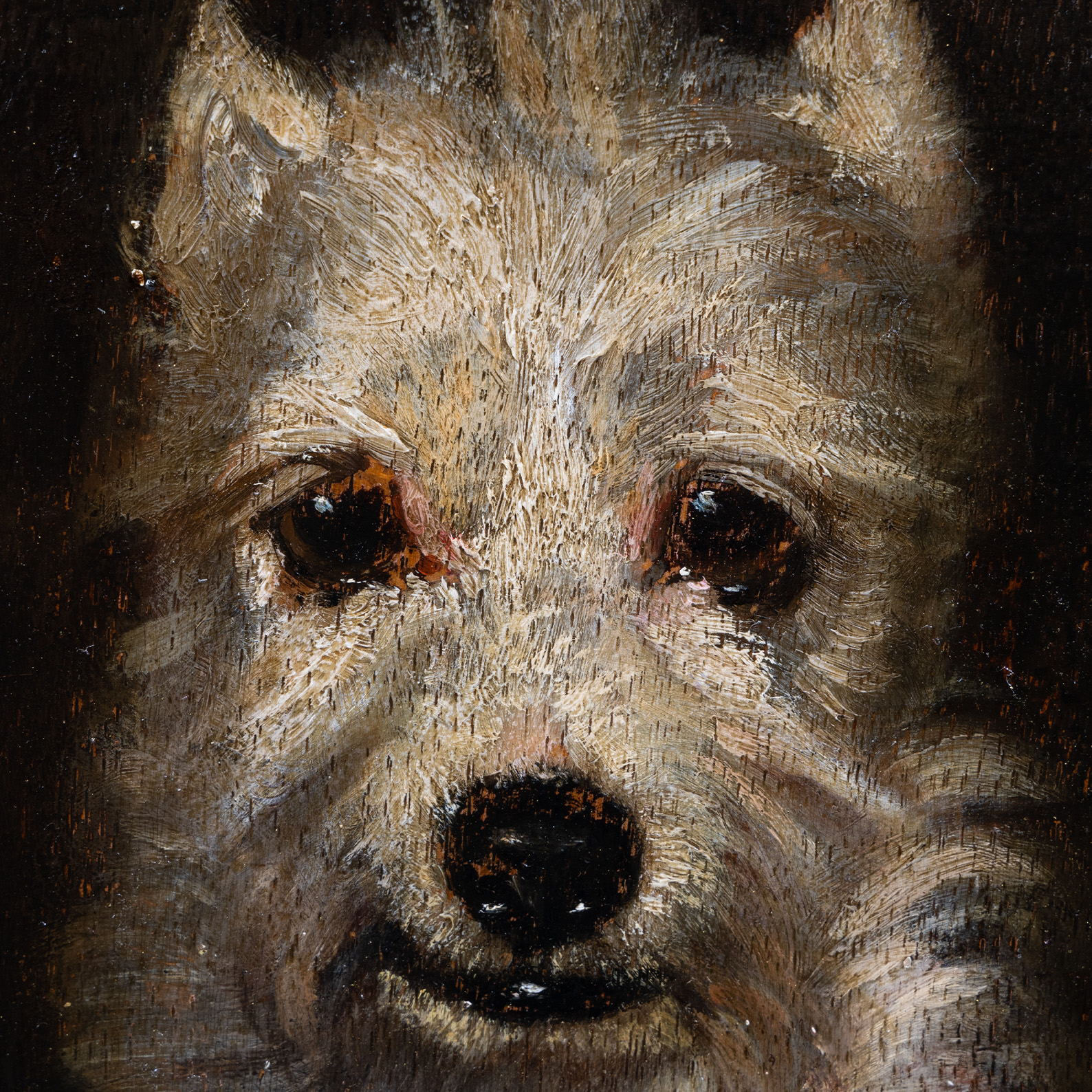
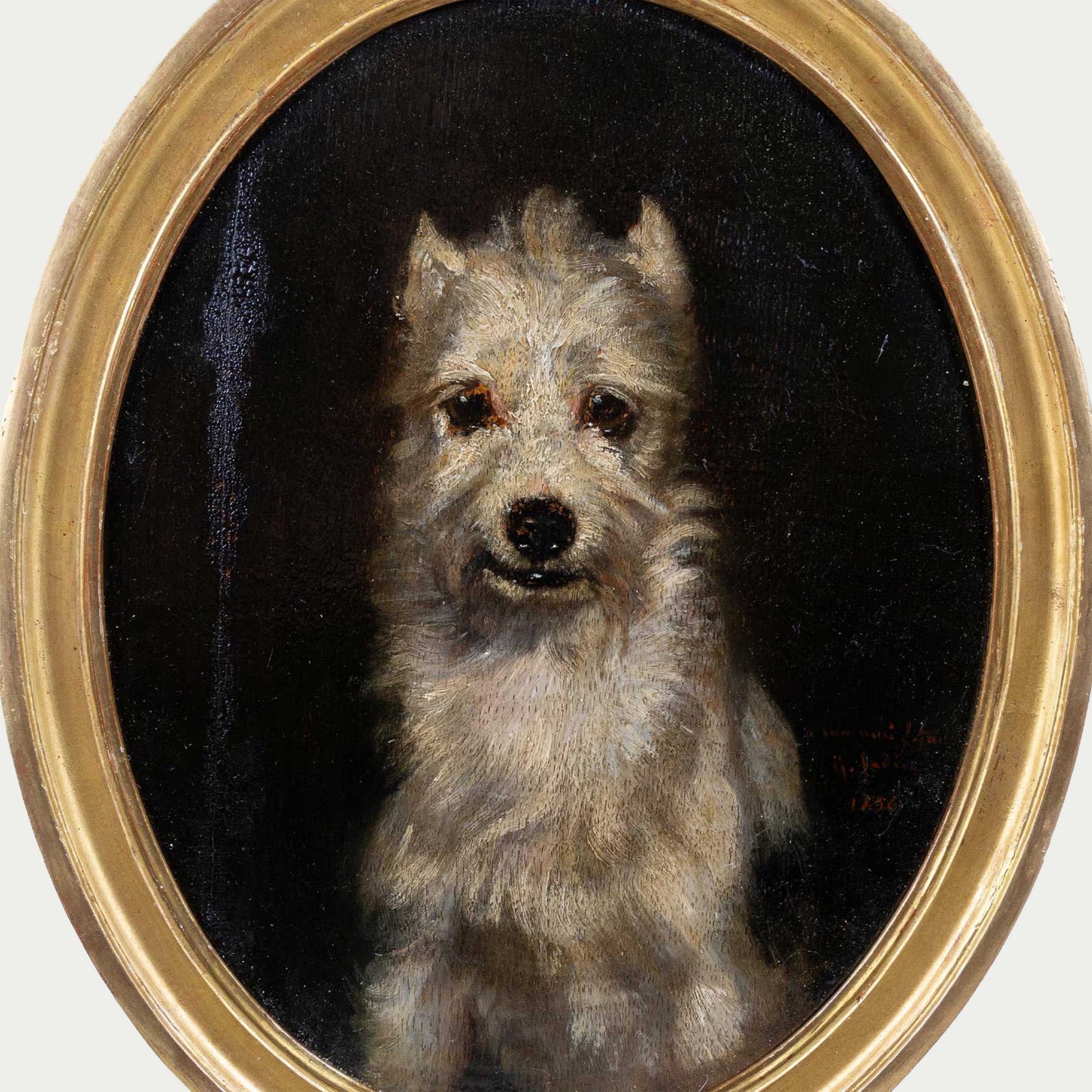
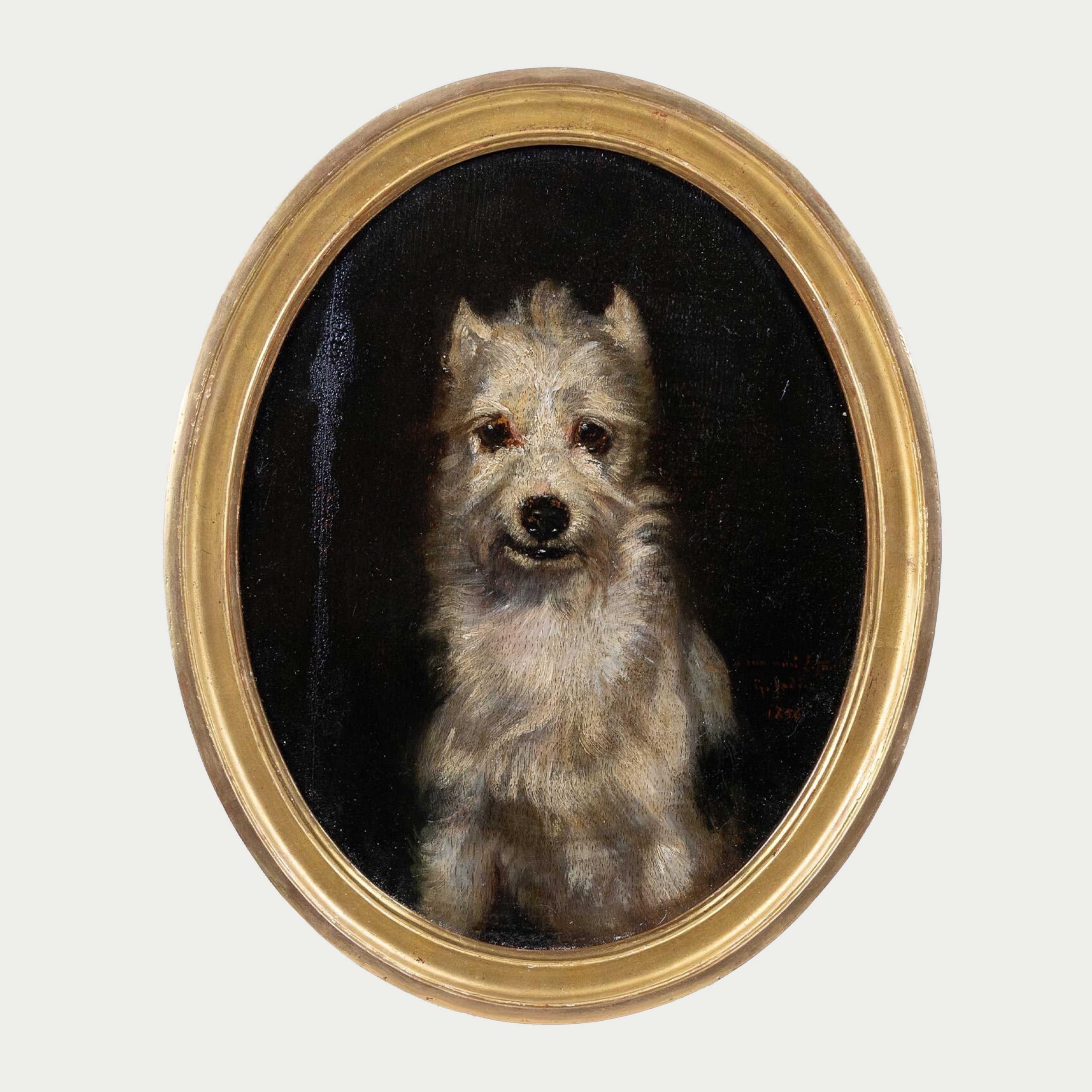
An exceptional portrait of a terrier-type dog dating from the Second Empire period (1856), painted by the famous imperial animal painter Louis Godefroy Jadin (1805–1882). The work is mounted on its original oval oak panel, set in a period gilded wood frame.
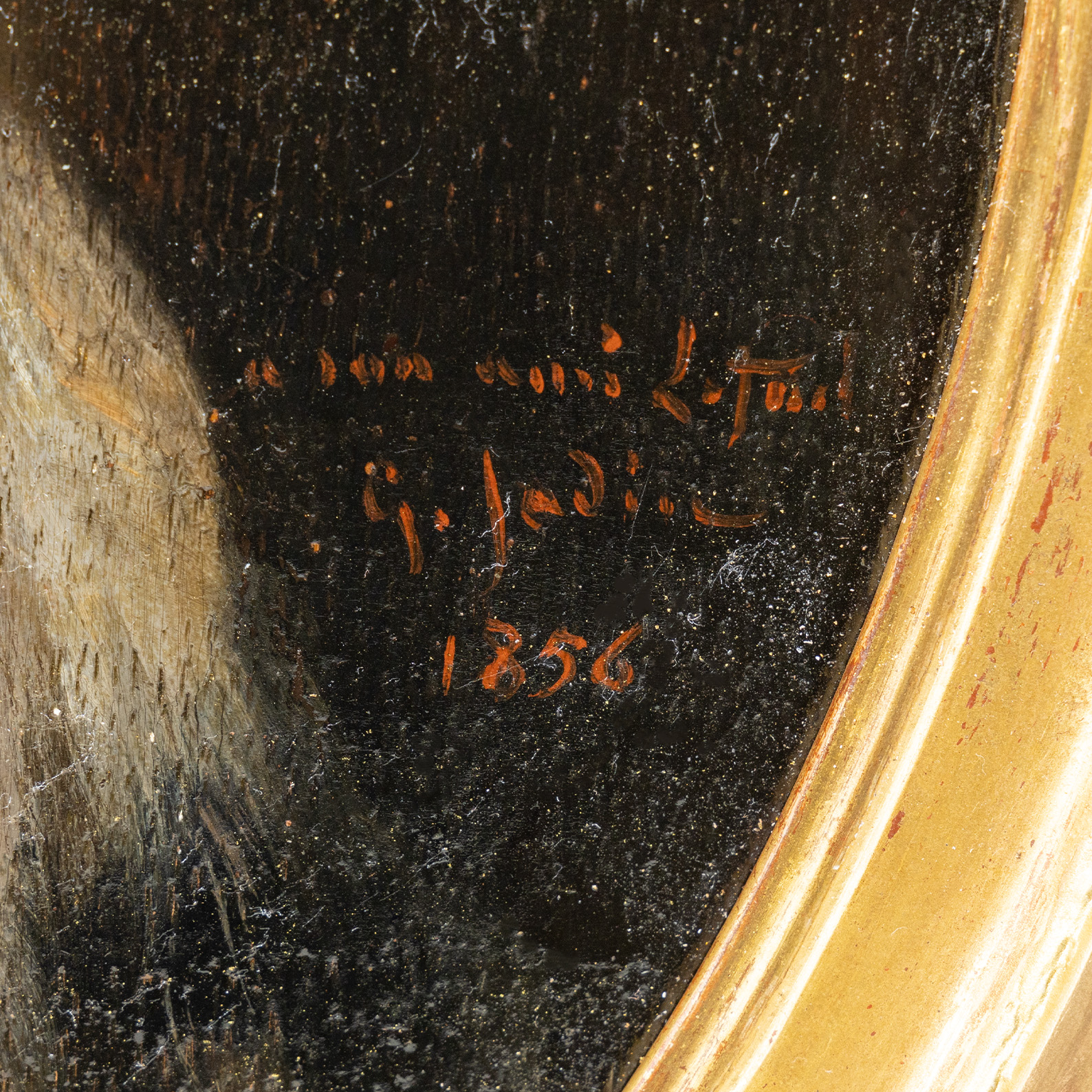
This painting boasts a prestigious historical provenance and impeccable traceability. On the right side of the panel, the artist has inscribed a personal dedication in his own hand:
“To my friend Lefuel / G. Jadin / 1856”
This inscription directly links the work to Hector Lefuel (1810–1880), the eminent chief architect appointed by Emperor Napoleon III to oversee the monumental project of completing the Louvre Palace and the Tuileries. Given the close friendship that bound the two men at court, the animal depicted was most likely Lefuel’s own faithful companion.
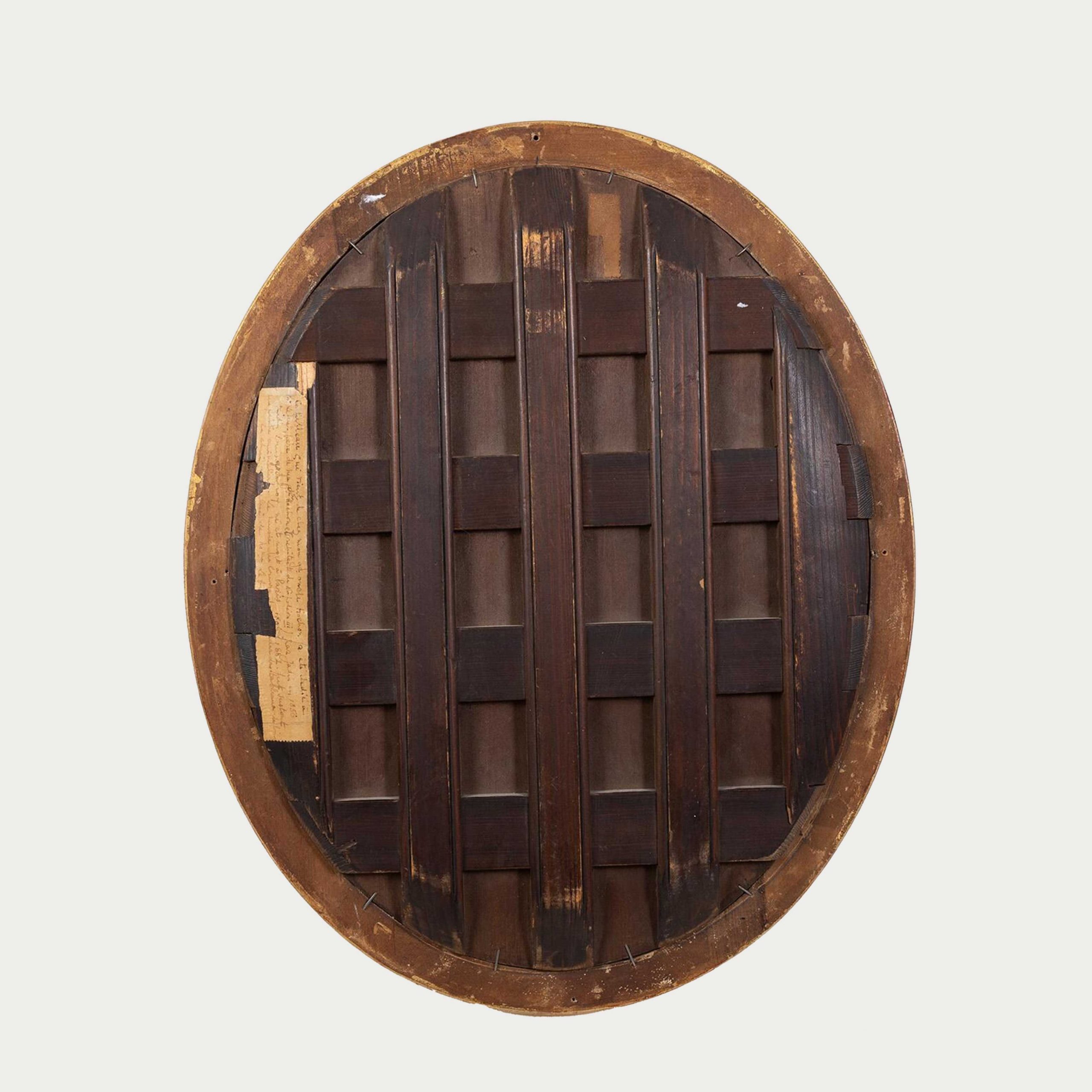
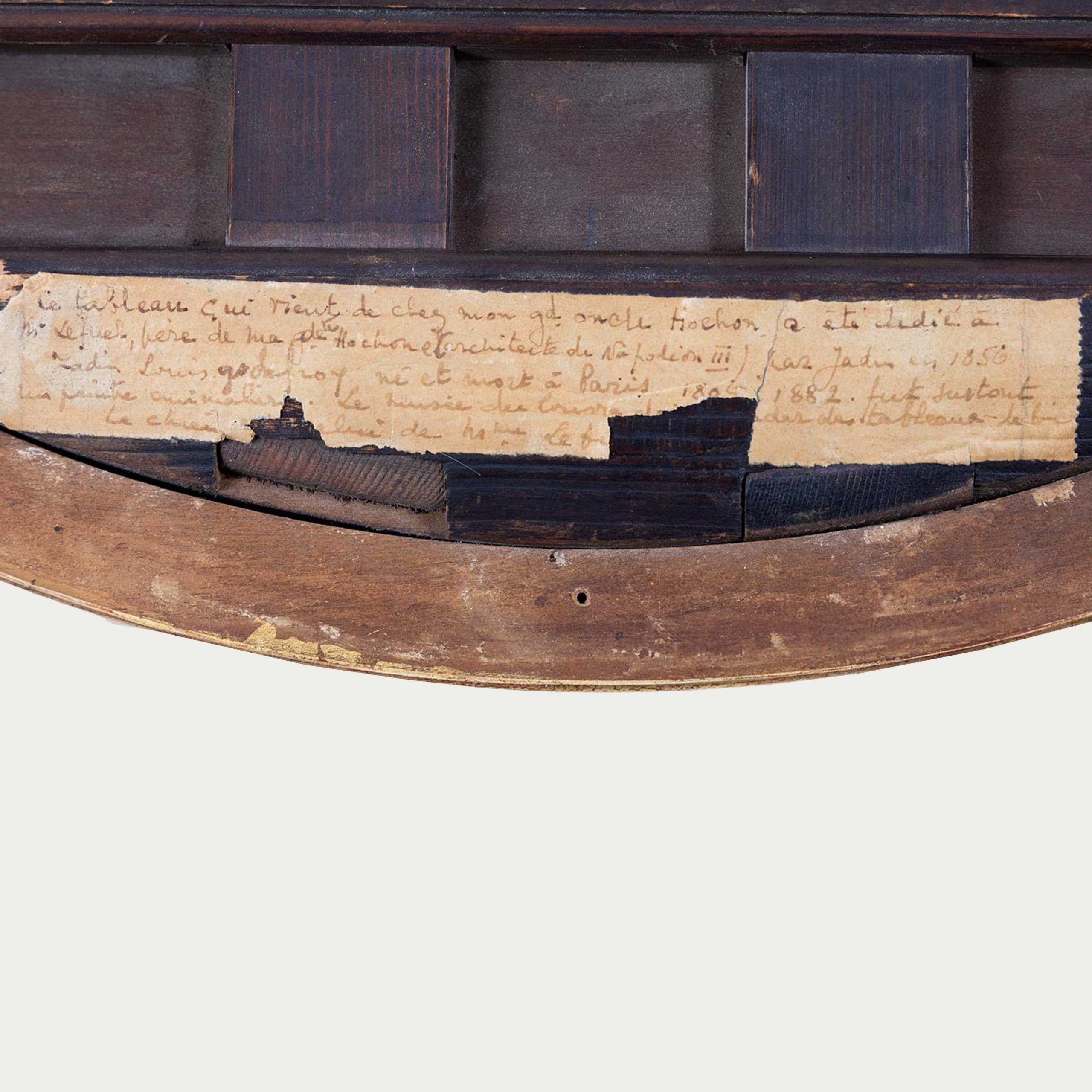
The reverse side of the wooden panel preserves a valuable handwritten archival label from the period detailing the family genealogy. This label traces the work’s history from Lefuel’s home through his son-in-law’s family (the Hochon family), while also noting the presence of works by Jadin in the national collections of the Musée de Compiègne.
Nicknamed during his lifetime the “Raphael of the Puppies” by his contemporaries (notably by his friend Alexandre Dumas) due to the psychological sensitivity and anatomical accuracy he imbued in his subjects, Jadin brilliantly captures here the lively, alert, and deeply endearing expression of this terrier. A high-quality piece combining elite animal art with the grand history of the imperial entourage.
Dimensions: Unframed 30 x 38 cms.
Universal Condition Report (French)